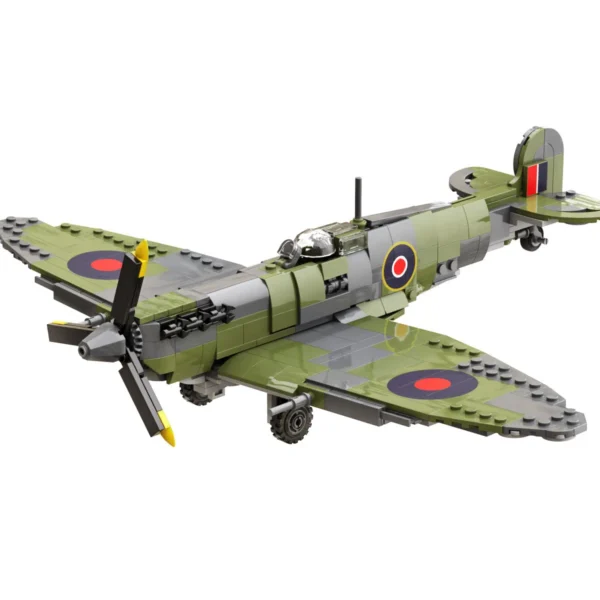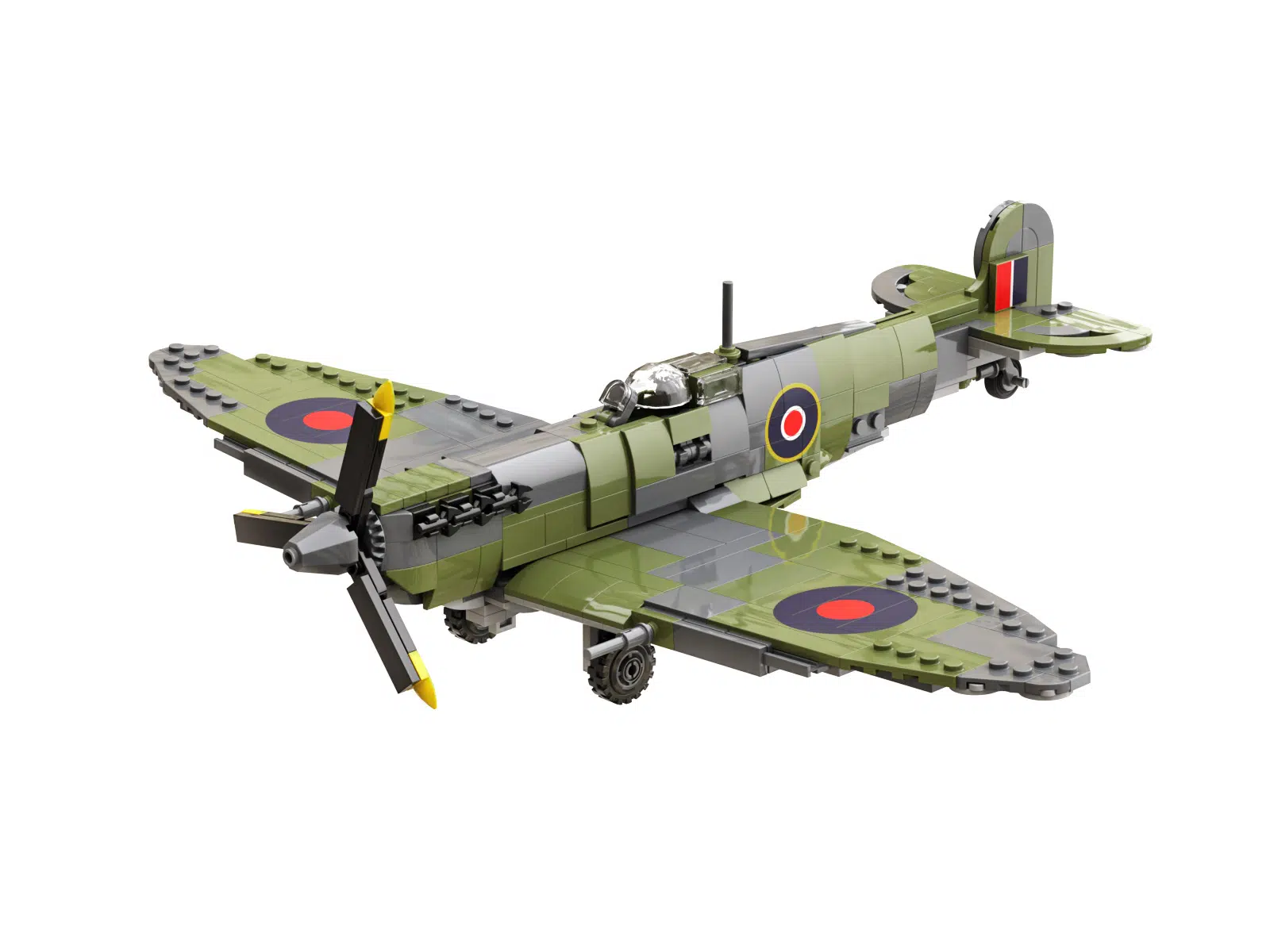
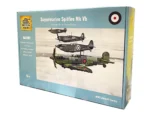
The iconic Supermarine Spitfire was the most-produced British fighter aircraft and is one of the most famous planes of World War II. It was designed as a single-seat, short-range, high-performance interceptor. During the Battle of Britain, from July to October 1940, it became a symbol of freedom for the British public by fighting the Messerschmitt Bf 109 and repelling Luftwaffe air raids alongside another great fighter, the Hurricane.
With a higher win-loss ratio than the Hurricane, the Spitfire became the backbone of RAF Fighter Command after the Battle of Britain. It was widely used by the Allies and saw action in the European, Mediterranean, Pacific, and South-East Asian theaters. Thanks to its excellent performance, the Spitfire served as an interceptor, photo-reconnaissance aircraft, fighter-bomber, and trainer well into the 1950s.
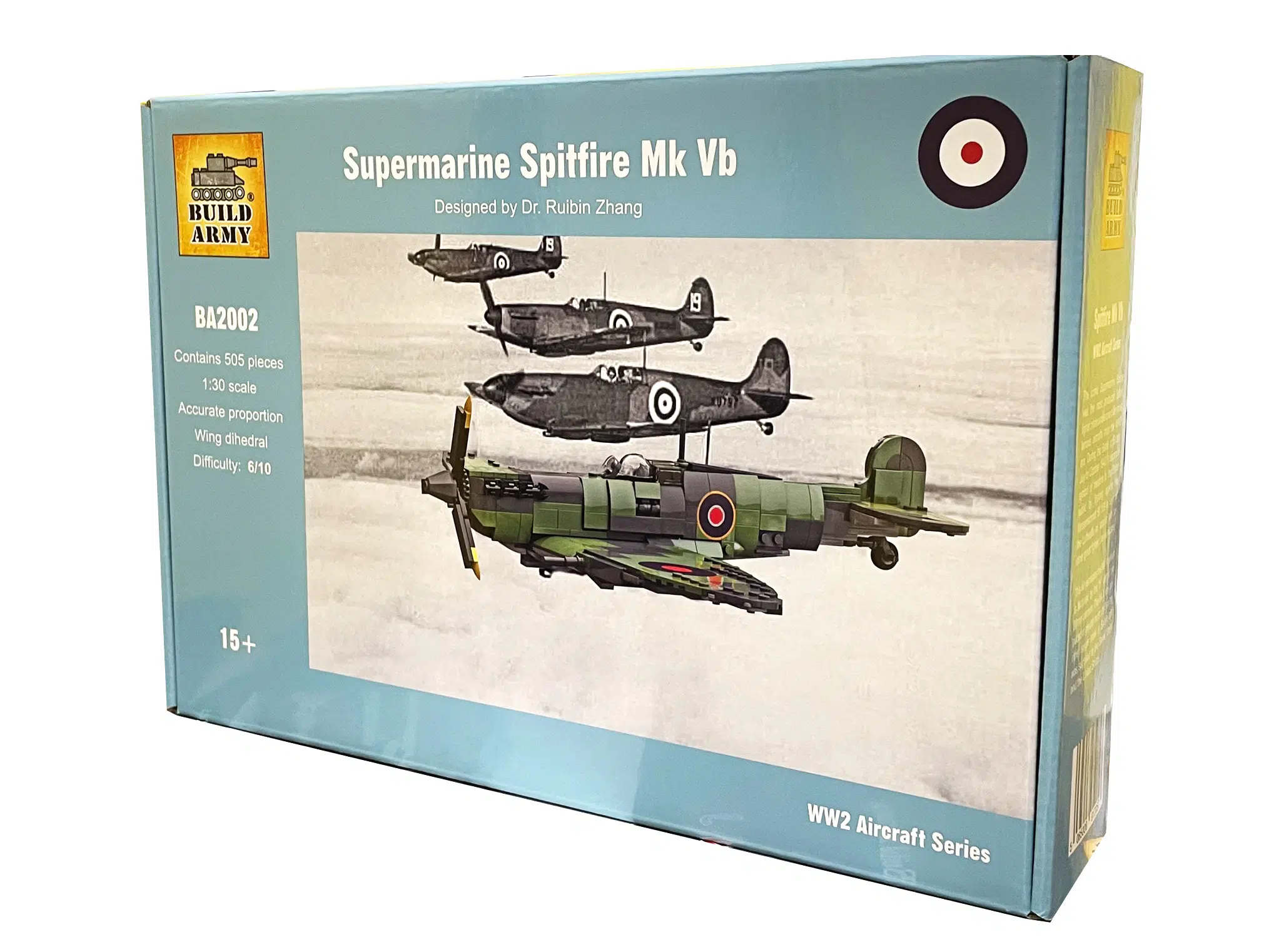
A total of 20,341 Spitfires were built, including variants with different wing configurations and engines. The Spitfire remains popular among enthusiasts: nearly 60 examples are still airworthy and many others are on display in aviation museums worldwide. This building set by Buildarmy recreates the Mk Vb, characterized by the “b” wing featuring two 20mm cannons. The Mk V was produced in larger numbers than any other Spitfire mark and was supplied to both the Soviet Union and the United States.